
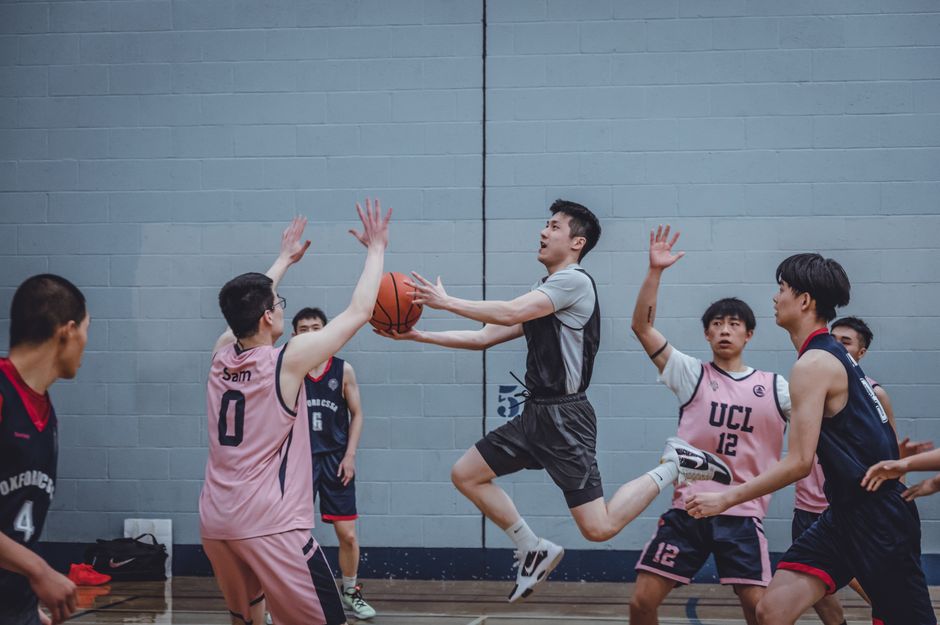
Effective basketball offensive strategies help a team create high-quality shots rather than relying on difficult individual plays. The strongest offenses combine floor spacing, purposeful movement, screening, quick decisions and player roles that fit the lineup.
Core principles of a successful basketball offense
Most offensive systems are built around a few repeatable ideas. Players should create enough space for drives, move the ball before the defense can recover and attack gaps with a clear purpose. These principles apply to youth basketball, school teams and advanced half-court offenses.
Maintain useful spacing
Spacing prevents defenders from crowding the ball. A common setup places players around the perimeter with a post player or screener near the lane. If a defender helps on a drive, the nearest teammate should be available for a pass rather than standing in the same area as another attacker.
Good spacing also gives the ball-handler room to use a ball screen. Teams often use four-out spacing, with four players outside the lane and one interior player, or five-out spacing, where every player begins on the perimeter and cuts into open space.
Move the ball and change sides
Ball movement forces the defense to rotate. Reversing the ball from one side of the court to the other can expose a late closeout, a mismatch or an open driving lane. Passes should generally move the defense, not simply transfer responsibility from one player to another.
Useful actions include the extra pass, skip pass, dribble handoff and inside-out pass. A post entry followed by an immediate relocation can also create a better angle for a return pass or perimeter shot.
Attack closeouts under control
When a defender rushes toward a shooter, the offensive player can shoot, drive or make one more pass. The best choice depends on the defender’s balance, the help position and the player’s own strengths. A controlled closeout attack is usually more effective than dribbling into traffic without a plan.
Common basketball offensive systems
Motion offense
A motion offense gives players rules for cutting, screening and filling open spaces instead of assigning every movement in advance. Typical actions include basket cuts after a pass, backdoor cuts against aggressive defenders, away screens and exchanges between perimeter players.
This approach develops decision-making and can work with different lineups. It requires timing, communication and discipline because players must recognize when to cut, when to screen and when to maintain spacing.
Pick-and-roll offense
The pick-and-roll pairs a ball-handler with a screener. After setting the screen, the screener can roll toward the basket, pop to the perimeter or slip the screen before contact if the defense is overplaying. The ball-handler reads the defender guarding the screen and the available help defenders.
Variations include the side pick-and-roll, high pick-and-roll, empty-corner pick-and-roll and Spain pick-and-roll. In a Spain action, a third player screens the defender of the rolling big, which can create confusion near the rim. Spacing on the weak side determines whether the defense can help without giving up an open shot.
Post-up and inside-out play
A post-up offense uses a strong interior player to draw help and create scoring opportunities near the basket. The post player should establish position, inspect the floor and make a quick decision rather than holding the ball while the defense sets.
Perimeter players can support the post with baseline cuts, split cuts and relocation. If a second defender digs down, the post player may pass out for a catch-and-shoot opportunity or a closeout attack.
Transition offense
Fast-break basketball begins with a defensive rebound, turnover or quick inbound. The first priority is to advance the ball while defenders are unorganized. Wings should run wide lanes, the ball-handler should look ahead and a trailing player can arrive for a three-point attempt or secondary action.
If an immediate fast break is unavailable, teams can flow into early offense. A transition drag screen, rim run or quick handoff may create an advantage before the opponent establishes its half-court defense.
Choosing an offensive strategy against different defenses
Against man-to-man defense
Against man defense, screen quality and cutting angles matter. A team can use on-ball screens to force switches, off-ball screens to free shooters or backdoor cuts when defenders deny passes. Attacking a mismatch is useful only if the offense preserves spacing around it.
Against zone defense
Zone offense aims to place players in gaps between defenders. The high post, short corner and baseline can be valuable areas, depending on the zone’s shape. Quick ball reversals can shift the zone, while an inside touch may force defenders to collapse before the ball is passed back outside.
Against a 2-3 zone, teams often look for high-post catches, short-corner passes and corner shots created by inside-out movement. Against a 3-2 zone, the short corner and baseline may be more available than the top of the key.
Against full-court pressure
Breaking a press requires reliable inbound spacing, passing outlets and composure. Players should avoid standing in straight lines and should create passing angles by cutting toward the ball or sprinting into space. Once the first line of pressure is beaten, the offense should attack the numbers advantage rather than slowing down automatically.
How to improve offensive execution
A playbook matters less than execution. Teams should define where each action starts, what the first read is and how the offense continues if the initial option is covered. Practices can emphasize advantage situations such as two-on-one drives, pick-and-roll reads, post passing and late-clock possessions.
Players also benefit from tracking practical details: turnovers caused by poor spacing, missed chances to make the extra pass, rushed shots and possessions where a screen created an advantage. Film review can reveal whether a problem comes from the selected basketball play, poor timing or a missed defensive read.
Frequently asked questions
What is the most effective basketball offensive strategy?
There is no single best offense for every team. A motion offense suits players who pass and cut well, while a pick-and-roll system may fit a strong ball-handler and mobile screener. The most effective strategy matches the roster’s skills and produces good spacing and clear reads.
What is the difference between a set play and an offensive system?
A set play is a planned sequence designed to create a particular shot or matchup. An offensive system is a broader structure that governs spacing, movement and decisions across many possessions. Teams often use set plays within a motion, post or pick-and-roll framework.
How can a team create more open shots?
Teams can improve shot quality by spacing the floor, setting effective screens, reversing the ball, attacking closeouts and making the extra pass. Open shots usually come from forcing the defense to help and then responding quickly to its rotation.