
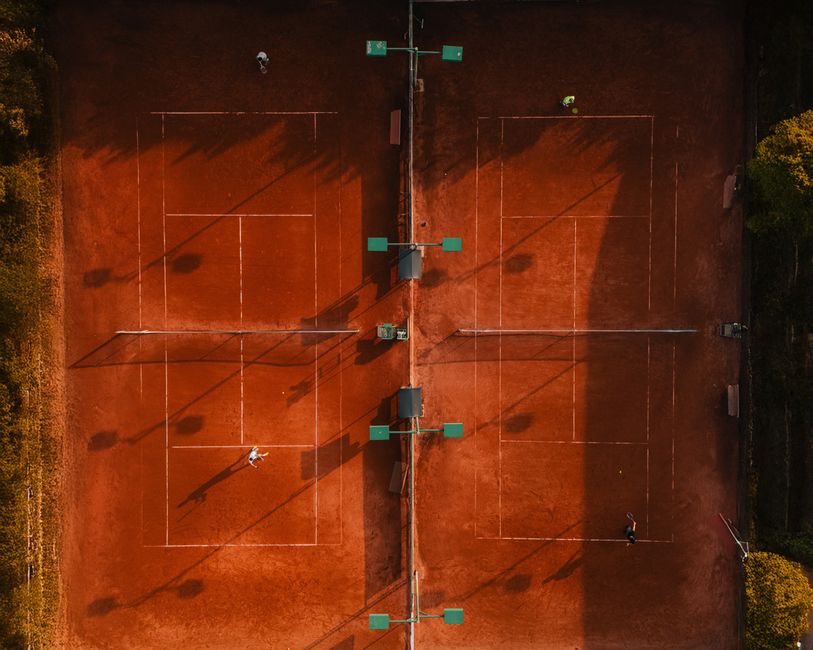
Singles and doubles tennis use the same basic scoring system, but they feel like very different sports. Singles places one player on each side of the net, while doubles uses two players per team and adds the doubles alleys to the court. That change affects positioning, shot selection, communication and fitness demands.
What is the difference between singles and doubles tennis?
The clearest difference is the number of players: singles is one versus one, while doubles is two versus two. Singles matches use the narrower court between the singles sidelines. Doubles matches use the full court width, including the alleys on either side.
In both formats, the server must deliver the ball diagonally into the correct service box, and players usually need to win six games by a margin of two games to take a set. Tiebreak rules can vary by competition, so players should check the tournament regulations before a match.
| Feature | Singles tennis | Doubles tennis |
|---|---|---|
| Players | One per side | Two per side |
| Court area | Singles court | Full doubles court |
| Main coverage demand | One player covers the entire court | Partners divide responsibilities |
| Important skills | Endurance, consistency and rally construction | Communication, quick reactions and net play |
| Typical movement | Longer lateral and baseline movement | Shorter explosive movements and coordinated positioning |
Singles tennis rules and tactics
Singles tennis demands complete court coverage. After most shots, a player aims to recover toward a useful central position, although the exact position depends on the shot, score and opponent. A wide ball can force a player to defend several metres of court before the next shot.
Successful singles tactics often involve moving the opponent rather than hitting every ball at maximum power. Players may use cross-court groundstrokes to create space, change direction with a down-the-line shot or approach the net after producing a difficult ball. Serving patterns, return depth and rally tolerance are especially influential in longer singles matches.
The physical workload in singles tennis usually includes more sustained running, repeated changes of direction and longer stretches of independent decision-making. A player must manage their own strategy and energy without a partner who can take responsibility for part of the court.
Doubles tennis rules and tactics
Doubles tennis adds teamwork to the technical demands of the sport. Partners normally decide who serves each game and who receives from each side. The receiving order remains fixed for the set, while the serving order follows the team’s selected rotation.
The doubles alleys are in play, giving teams more width for serves and groundstrokes. However, the extra space does not simply make doubles easier. Two opponents can cover the net together, close angles and pressure the returner. The ball may also travel between players more quickly, leaving less time to react.
Common doubles formations include one player at the baseline and one at the net, or both partners positioned near the net after a strong serve or return. Effective teams use clear signals, call for balls loudly and avoid leaving the middle of the court undefended. Poaching—moving across to intercept a shot intended for a partner—can create an advantage, but it requires trust and timing.
Singles vs doubles tennis: which is harder?
Neither format is automatically harder; they test different abilities. Singles generally places greater demands on endurance, court coverage and individual shot creation. Doubles often requires faster reactions, more precise positioning and better communication under pressure.
A strong singles player may need time to adjust to doubles because attacking the net, protecting the middle and coordinating with a partner change the normal rhythm. A doubles specialist may find singles physically demanding because there is no partner to cover the opposite side or finish points at the net.
The answer also depends on playing level. Recreational doubles can feel more forgiving because a partner shares the court, while competitive doubles can be extremely fast and tactically complex. At advanced levels, serve placement, return quality and the first two shots often decide the point.
Which format is better for fitness and enjoyment?
Singles usually provides more continuous running and can be a demanding cardiovascular workout. It may suit players who enjoy long rallies, individual competition and controlling every tactical decision.
Doubles can still be intense, but the movement is often more explosive and intermittent. It may suit players who prefer social competition, net play, quick points and shared responsibility. Doubles is also a practical choice for four people who want to play together rather than wait for separate court time.
Players returning from injury should consider court movement, match duration and their ability to change direction safely. The right format depends on current fitness, experience, playing partners and the intensity of the session.
Frequently asked questions about singles and doubles tennis
Is the scoring different in singles and doubles tennis?
The basic scoring system is the same in most competitions: points form games, games form sets and sets determine the match. Some doubles events use a match tiebreak instead of a deciding set, so competition rules should be checked in advance.
Can singles players use the doubles court?
Singles matches use the narrower singles court. The doubles alleys are normally out of bounds for singles rallies, although the full court may be used during certain practice drills.
Is doubles tennis easier than singles?
Doubles may involve less total court coverage for each player, but it demands communication, quick reactions and accurate positioning. The format is different rather than universally easier.
What should a beginner learn first in doubles tennis?
Start with the serving and receiving order, basic partner communication, movement after the serve and protection of the middle. Consistent returns and clear calls are usually more valuable than attempting difficult winners.