
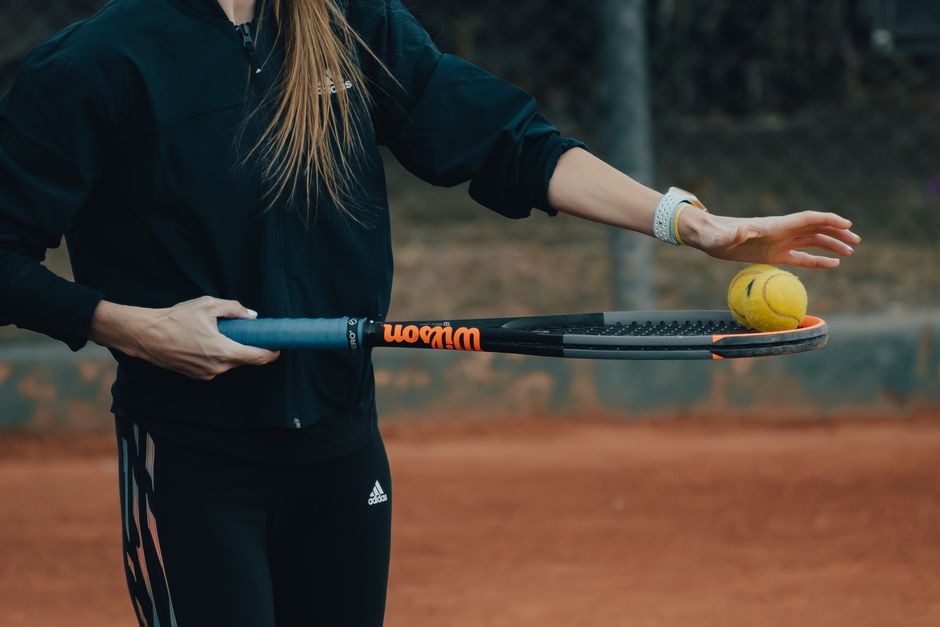
Learning how to serve in tennis takes coordination more than raw power. A dependable tennis serve starts with a repeatable setup, a controlled ball toss, and contact made high in front of the body. Build those parts first, then add speed.
Set up for a consistent tennis serve
Stand sideways to the net with your front shoulder pointing toward the service box. A right-handed player usually places the left foot near the baseline and the right foot behind it; left-handed players reverse the arrangement. Keep your feet comfortable rather than forcing an extreme stance.
Hold the racket with a continental grip, similar to holding a hammer. This grip makes it easier to create a proper racket drop and swing up toward the ball. Place the ball in the fingertips of your non-racket hand, and start with both hands together in front of your body.
How to toss the ball and make contact
- Begin the motion together. Raise the racket arm and tossing arm at a similar pace. Avoid throwing the ball far in front of you.
- Release the ball smoothly. Use the arm rather than flicking the wrist. For a flat serve, the ball should rise slightly in front of your hitting shoulder.
- Reach upward. Contact the ball at full comfortable extension, with the racket face moving up and forward. The ideal contact point is usually in front of the body, not directly above the head.
- Finish across the body. Let the racket travel down on the opposite side while your back foot may move forward naturally. Do not stop the racket immediately after contact.
The ball toss controls much of the serve technique. If it lands well behind you, you will often fall backward and lose pace. If it drifts too far into the court, you may reach and pull the shot wide. Practice tossing to the same height and catching the ball before adding a full swing.
How to add pace without losing accuracy
Many players try to hit a faster tennis serve by swinging harder with the shoulder. A better sequence uses the legs, torso rotation, shoulder, forearm, and wrist in order. Bend the knees slightly, push upward, and allow the racket to accelerate through contact.
Start with a half-speed serve aimed toward the center of the service box. Once you can land several serves in a row, move the target toward the body or the outside corner. Accuracy should come before maximum speed, especially on a first serve.
- Flat serve: Use a more direct swing for pace, but accept a smaller margin over the net.
- Slice serve: Brush around the side of the ball to create sideways movement. It can pull an opponent off court.
- Kick serve: Brush up the back of the ball. This requires more racket-head speed and a higher net clearance, so it is usually developed after the basic motion.
Common serving mistakes and practical fixes
Inconsistent toss: Keep the tossing arm extended longer and release the ball without a wrist snap. If the toss is poor, catch it and restart instead of forcing the swing.
Using the wrong grip: A forehand grip often prevents the racket from dropping naturally. Move toward a continental grip gradually and rehearse the motion without hitting a ball.
Opening the shoulders too soon: Turning toward the net before contact reduces control. Stay side-on during the loading phase and rotate as the racket moves upward.
Falling into the court: Some forward movement is normal, but a large jump usually indicates that the toss is too far forward. Bring the release point closer to the hitting shoulder.
Trying to serve hard every time: Power without a reliable toss creates double faults. Use a slower second serve with more spin and height over the net when consistency matters.
A practice routine for improving your serve
Spend a few minutes tossing and catching, aiming for the same contact position each time. Next, hit gentle serves from inside the baseline, then move back once the motion feels stable. Finish by playing points where you focus on a clear target rather than speed.
Record a few serves from the side if possible. Look for the ball-toss location, racket position before contact, and balance after the follow-through. Changing one detail at a time makes it easier to identify what is improving the result.
Frequently asked questions about serving in tennis
How long does it take to learn a tennis serve?
Most players can learn the basic motion in a few sessions, but consistency develops through regular practice. The toss often takes longer to stabilize than the swing.
Where should a beginner aim the serve?
Aim toward the middle of the service box first. This gives more margin than targeting a corner and helps you build a repeatable motion.
Can I serve without jumping?
Yes. A standing serve is useful for learning the grip, toss, contact point, and follow-through. Add a stronger leg drive only after the basic sequence is controlled.
What should I do if the serve keeps going into the net?
Check whether the toss is too low or behind you. Reach upward through contact and give the ball enough height before trying to increase racket speed.